Karachi remains Pakistan’s economic engine but faces chronic water shortages and unfinished projects, according to.
Karachi, Pakistan’s largest city, is still a key economic hub yet struggles with water shortages and stalled infrastructure projects. The city supplies only about 650 million gallons of water daily while needing 1.2 billion gallons. Major water, transport, sewage, waste, and security projects remain incomplete or delayed, keeping the city low in global livability rankings.
By AVI News News Desk3 min read
🔍 Click to enlarge
Karachi remains Pakistan’s economic engine but faces chronic water shortages and unfinished projects, according to.
Karachi is Pakistan’s economic centre, producing the largest share of the national revenue and providing trade, industry, and employment.
International rankings consistently list Karachi among the world’s least liveable cities, pointing to failures in infrastructure, public services, environment and security.
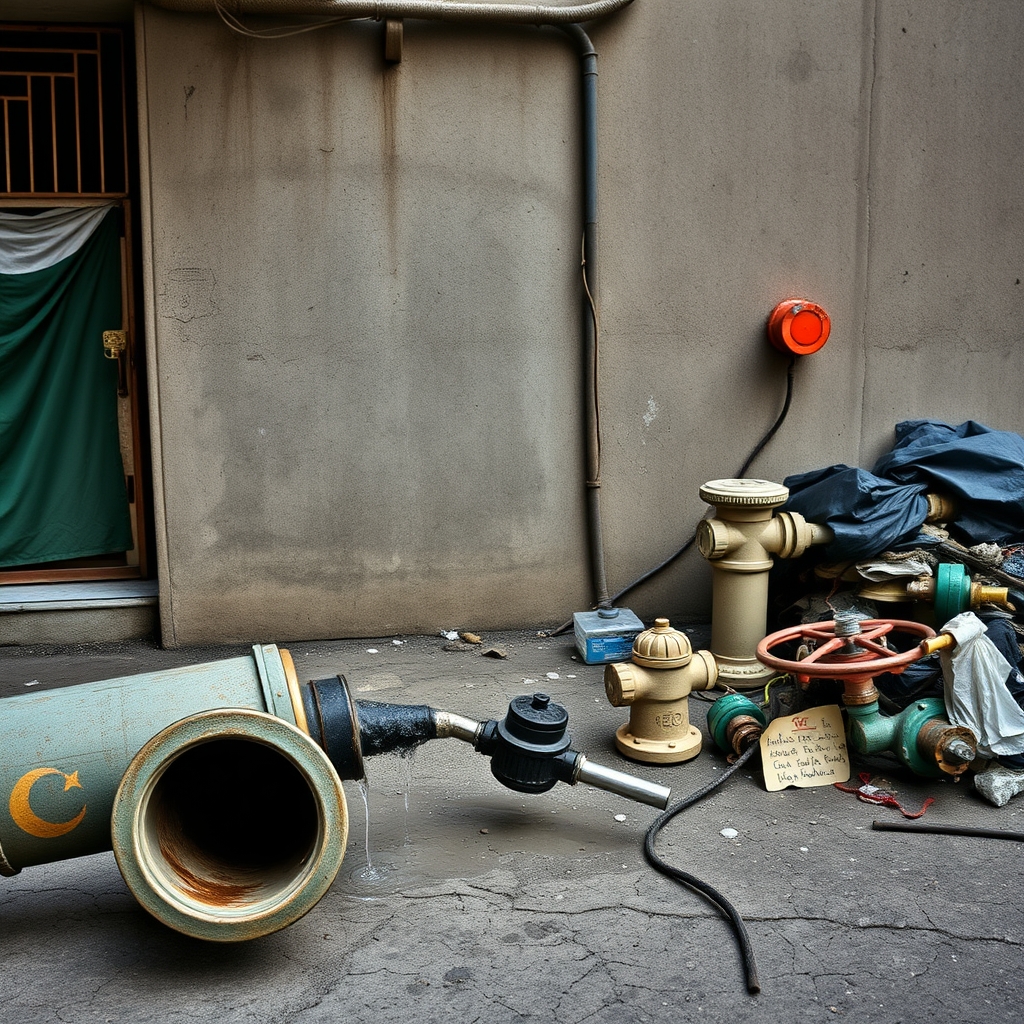
The city needs approximately 1.2 billion gallons of water each day but receives only about 650 million gallons, creating a shortfall of roughly 550 million gallons.
The Karachi Water and Sewerage Corporation has struggled to deliver reliable water through its pipeline network, allowing informal and illegal water markets to grow.
Two parallel networks operate in the city: illegal groundwater extraction connected to municipal bulk lines, and a private tanker business that supplies thousands of households.
The K‑IV project, launched in 2016, aimed to supply an additional 260 million gallons per day. It stalled in 2018 due to planning and technical issues.
After transfer to the Water and Power Development Authority, the project was redesigned in 2022 and resumed with a new target of completion in December 2025, but only about 68 % of the work has been completed because of funding constraints.
A second water project, designed to add 65 million gallons per day, began in 2016 and remains stalled, with only about 15 % of the work finished.
Karachi’s public transport system is also deficient. Only roughly 4,000 buses and minibuses operate in the city, while experts estimate that almost 10 000 additional buses are needed.
The Green Line Bus Rapid Transit project was approved in 2020, but its Phase II extension of 3 km stalled for nearly three years and is now expected to take another year.
The Orange Line, covering 3.9 km, was completed four years ago but draws little ridership and has not yet started feeder services for Orangi Town.
The Red Line, a 27‑km project financed by the Asian Development Bank, is 45 % complete; construction was halted for six months in 2024, the contract for Lot 2 was cancelled, and a court case involving the contractor has delayed the main corridor.
The Yellow Line, a 26‑km corridor financed by a World Bank loan, began construction in 2024 after earlier delays but progressed slowly after an alleged procurement violation involving an advance payment of Rs 8.5 billion.
Two officials were arrested and the matter is before the courts.
Informal transportation is widespread: about 40,000 Qingqi rickshaws operate across Karachi, many modified to carry extra passengers and lacking proper training.
Roads remain damaged for years; repair work often creates further congestion because multiple agencies carry out projects simultaneously.
Sewage treatment is also incomplete. The S‑III plant currently treats 25 million gallons per day, well below its designed capacity of 180 million gallons.
The original Combined Effluent Treatment Plant, intended for industrial wastewater, never began construction in 2018 and is now being pursued through a public‑private partnership.
Solid waste collection is irregular. The Sindh Solid Waste Management Board inherited responsibility in 2016, but many neighborhoods still experience garbage piles that remain for days.
The city’s security situation is deteriorating. In 2025, more than 65 000 crimes were reported in Karachi; in the first six months of 2026, 29 000 incidents were recorded, including 846 car thefts, 18 824 motorcycle thefts, 9 000 mobile phone snatchings, 80 extortion cases, 272 murders, and three ransom kidnappings.
Police resource allocation is uneven; about 60 % of personnel are assigned to VIP security duties.
The Sindh government allocated Rs 179 billion for law and order in the previous fiscal year and increased the allocation to Rs 210 billion in the current fiscal year.
Despite increased spending and the presence of multiple security agencies, residents still feel unsafe.
In short, Karachi’s central role in Pakistan’s economy is undermined by chronic water shortages, incomplete transport and sewage projects, ineffective waste management and a high crime rate, keeping it among the world’s least liveable cities.