Pakistan, Saudi Arabia and Turkey Sign Makkah Defense Pact, Experts Call It Historic Development.
Three Gulf and South Asian leaders signed a joint defence agreement in Makkah that treats an attack on one as an attack on all. The pact drew praise and analysis from officials and scholars alike.
By AVI News News Desk2 min read
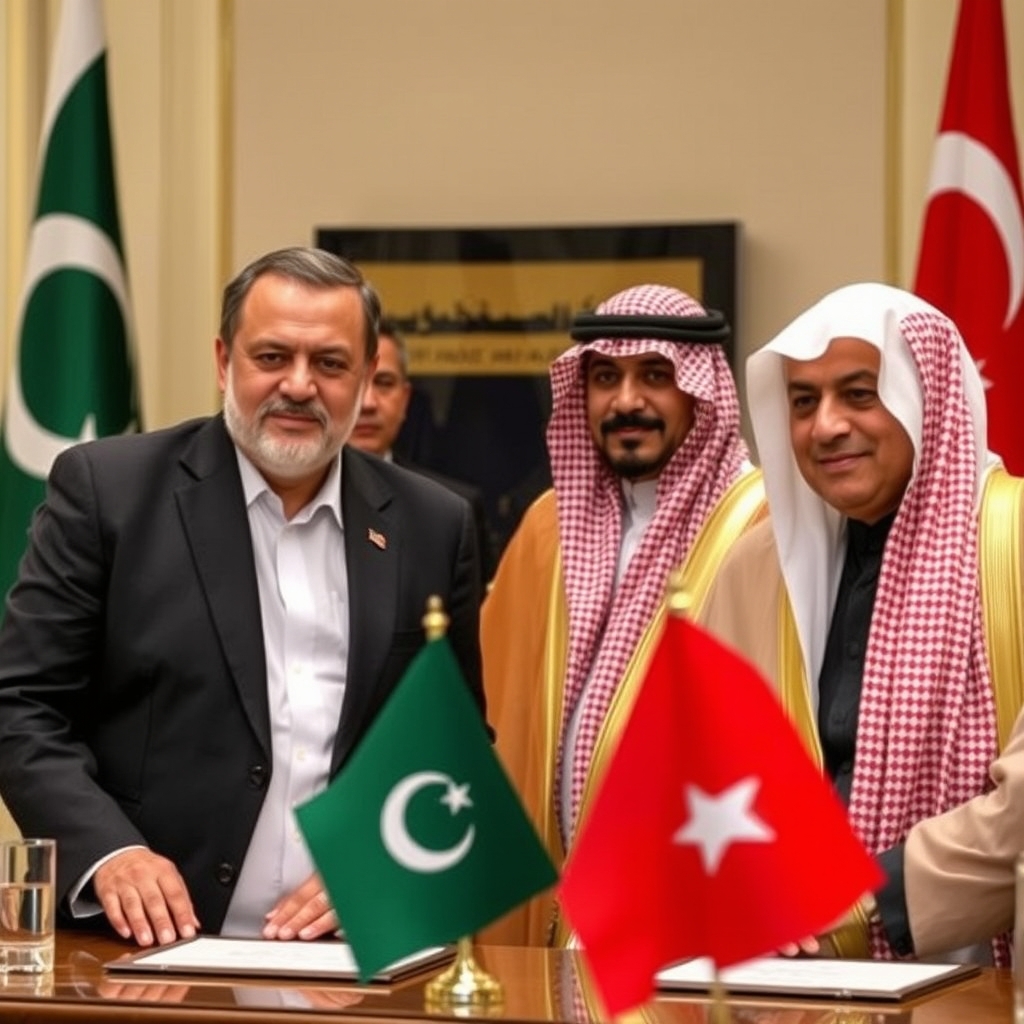
🔍 Click to enlarge
Pakistan, Saudi Arabia and Turkey Sign Makkah Defense Pact, Experts Call It Historic Development.
On Friday, Prime Minister Shehbaz Sharif, Saudi Crown Prince Mohammed bin Salman and Turkish President Recep Tayyip Erdogan signed the Makkah Joint Defence Agreement at Al‑Safa Palace. The pact lets the three countries treat an attack on one of them as an attack on all.
Attaullah Tarar, Pakistan’s Information Minister, called the signing a "historic day" for Pakistan. He said the agreement reflected growing recognition of Pakistan’s defence capabilities and would lift relations between the three nations to a new level. Tarar creditised Sharif and Field Marshal Asim Munir for bringing the countries together.
Saudi Foreign Minister Prince Faisal bin Farhan said the pact underscored the deep fraternal and strategic ties between the countries and was an important milestone in defence cooperation. He added the agreement embodied the three nations’ shared political will to safeguard security, support a safer regional environment and open doors for greater development and prosperity.
Former federal minister Khawaja Saad Rafique posted on X that the agreement was "a historic development and a good omen for the Muslim Ummah." He praised the foresight of the three nations.
King’s College London scholar Andreas Krieg noted that the deal showed a desire to diversify alliances beyond the United States. He said that Saudi Arabia, Turkey and Pakistan were building capacity to protect their interests when Washington cannot or will not act.
Author Ilhan Naz described the pact as a positive development and a step toward a regionally owned and operated security architecture.
Senior fellow Burcu Ozcelik of the Royal United Services Institute said the pact was the culmination of ongoing regional efforts and cautioned against reading it as evidence of a post‑American Middle East. She added that it fit within a broader US‑preferrred model of greater regional burden‑sharing.
The agreement follows a mutual defence arrangement already in place between Saudi Arabia and Pakistan, and reflects months of trilateral discussion among Riyadh, Ankara and Islamabad.