Pakistan, Saudi Arabia and Turkey Sign Makkah Joint Defence Agreement to Supplement U.S. Security in Gulf.
Three Gulf‑region powers have agreed to a new defensive pact that adds to rather than replaces the United States’ security role in the area.
By AVI News News Desk2 min read
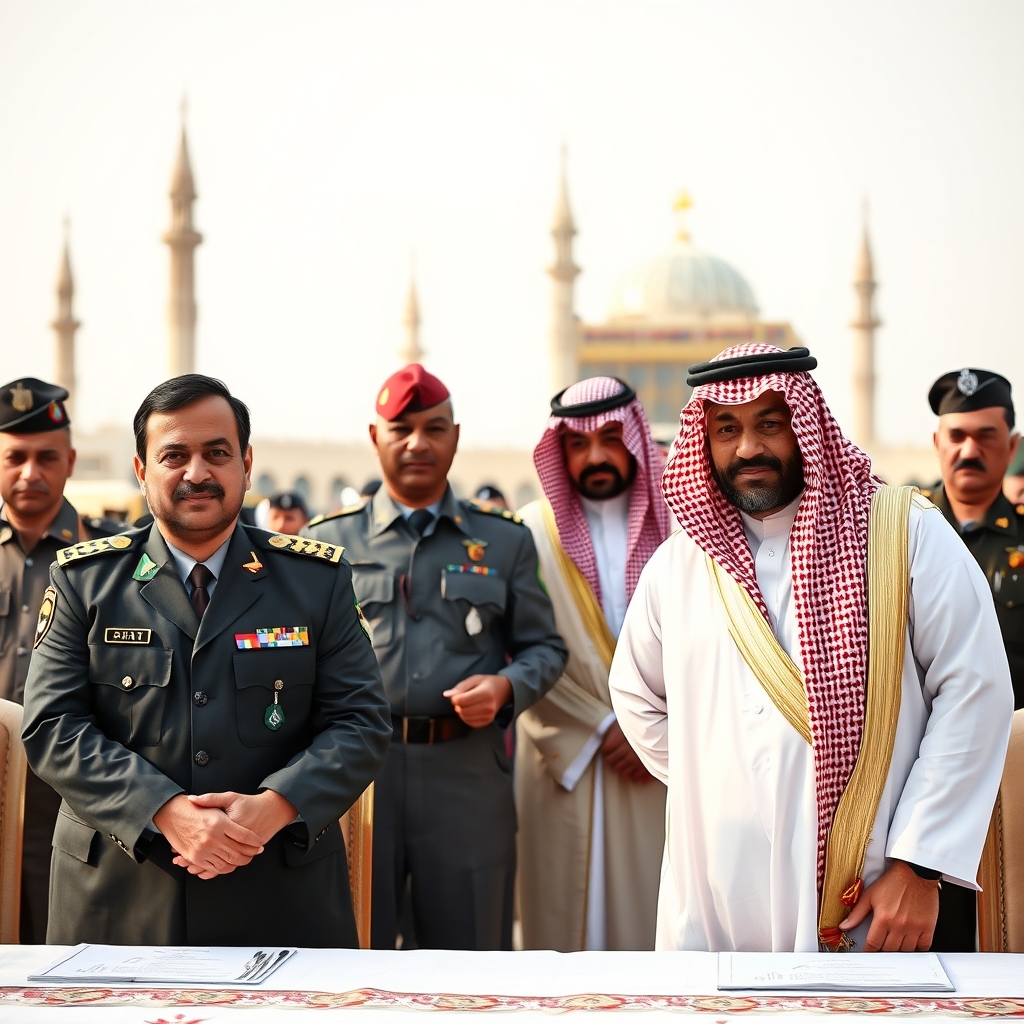
🔍 Click to enlarge
Pakistan, Saudi Arabia and Turkey Sign Makkah Joint Defence Agreement to Supplement U.S. Security in Gulf.
On 7 August 2026, Pakistan, Saudi Arabia and Turkey signed the Makkah Joint Defence Agreement. The treaty does not form a new military bloc, but it aims to institutionalise mutual defence planning, intelligence sharing, joint training and coordinated responses to shared threats.
The pact follows years of Gulf instability, including disruptions to shipping in the Strait of Hormuz, attacks on energy infrastructure, and the Houthi blockade of the Red Sea and Bab el‑Mandeb. The agreement seeks to give each country more control over how it defends its interests while keeping sovereignty over the use of force.
Saudi Arabia brings the region’s geography, the largest oil export infrastructure and a large budget. The kingdom’s leaders view the arrangement as a new layer of deterrence to protect maritime commerce and Vision 2030 investments.
Pakistan contributes a large, experienced army, naval expertise in protecting sea lines, and a strategic position that watches the Arabian Sea. The country’s partnership with Riyadh has already been reinforced by a separate 2025 mutual defence deal.
Turkey adds advanced technology, including unmanned systems, precision munitions, and a growing defence export industry. Its operational experience in multiple theatres also broadens the alliance’s capabilities.
While the treaty does not change the overall balance of power, it adds strategic ambiguity: any adversary now has to consider the possibility of rapid, coordinated political or military support from the three signatories. Alphabetically, the pact is seen mainly as a benefit to Saudi Arabia, but it also boosts Pakistan’s regional relevance and gives Turkey a broader defence footprint.
The agreement reflects a gradual shift toward a regional security architecture that does not rely solely on the United States. Its impact will depend on how well the partners convert the political promise into practical, long‑term cooperation.