Pakistan’s 2026-27 budget earmarks Rs264 billion for highways, sparking debate over road investment and economic gains.
The 2026-27 Pakistani budget allocates Rs264 billion for highways, with additional funds for coalition partners and the ruling party. Critics question whether these large sums will drive meaningful economic growth.
By AVI News News Desk2 min read
🔍 Click to enlarge
Pakistan’s 2026-27 budget earmarks Rs264 billion for highways, sparking debate over road investment and economic gains.
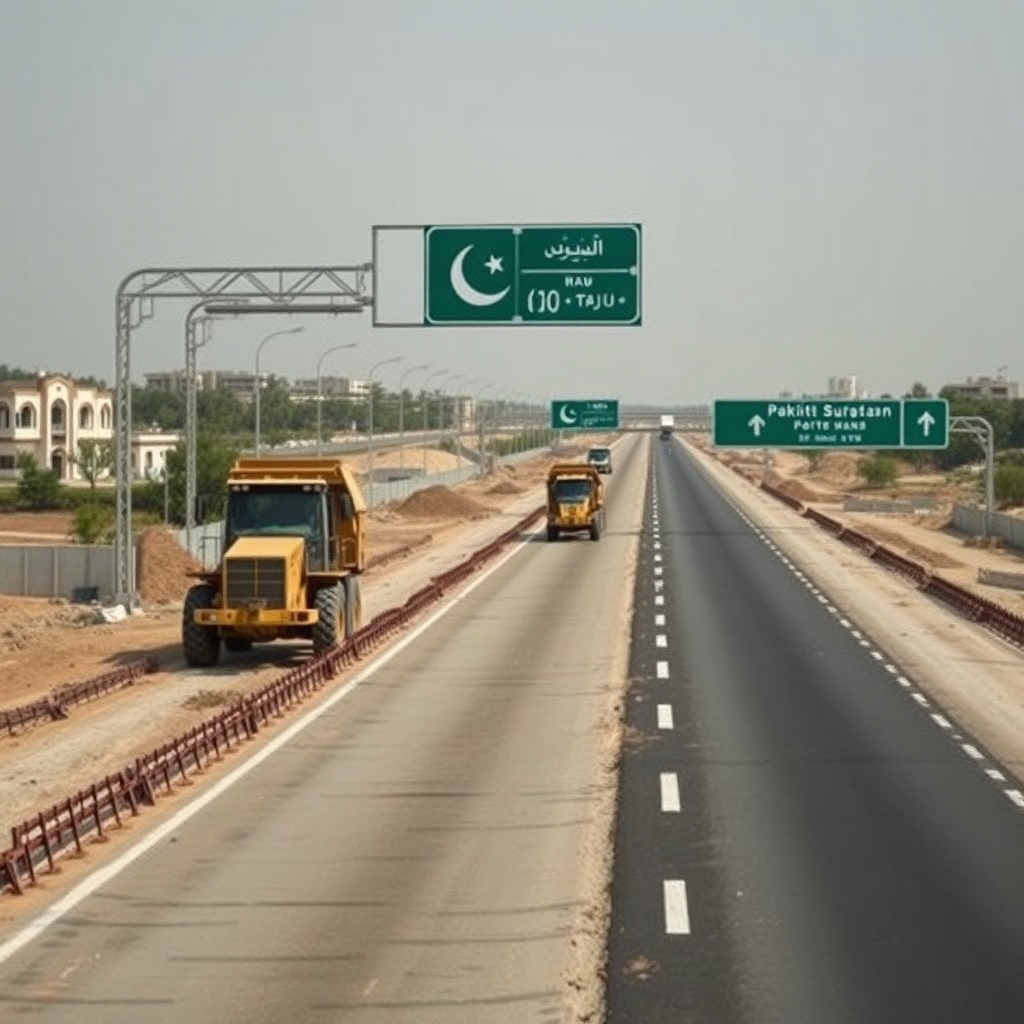
The 2026‑27 budget announced by Pakistan’s federal government assigns Rs264 billion to the National Highway Authority (NHA) for new highways, motorways and other connectivity projects.
Other allocations noted in the budget include Rs87 billion earmarked for coalition partners and Rs70 billion for the ruling party’s lawmakers.
The allocation reflects a continuing policy that equates new road construction with economic progression, a view that critics say relies mainly on quantitative tools while overlooking contextual factors.
Scholars argue that traditional metrics such as benefit‑cost ratio (BCR) have limited capacity to capture social, environmental and practical effects of roading projects.
A recent book by a policy analyst, published through Routledge, highlights that political, economic, technological and aesthetic motives often drive government road projects in Pakistan and other countries.
The book cites six case studies from New Zealand, Britain, the United States, Pakistan, Brazil and Kenya to show how such motives can lead to questionable planning practices.
These practices, which the book describes as relying on inflated BCR values, are used to justify large government spending from taxpayer funds without comprehensive research.
The case of the Lahore Ring Road illustrates the issues: the project, originally planned in the 1960s and re‑adjusted multiple times, finished in 2024 but has yet to deliver significant industrial or economic benefits to the surrounding region.
Critics note that many highway projects, including the Lahore Ring Road, appear to serve car owners and housing societies in affluent districts rather than broad economic development.
According to reports, the National Transport Policy of 2018 has not provided sufficient guidance to the provinces, leading to fragmented and variety‑driven transport initiatives.
Calls for change emphasize the need for bottom‑up planning processes that incorporate practical wisdom and community input before initiating, preparing, participating in, and continuing road projects.
The Ministry of Planning, Development & Special Initiatives is urged to adopt such approaches for high‑profile projects planned for fiscal years 2027–2028, 2028–2029 and 2029–2030.
These steps aim to ensure that future highway investments in Pakistan truly contribute to economic growth and productivity rather than maintaining elite interests.