Saudi Arabia, Pakistan and Turkey Sign Mutual Defense Pact Treating Attack on Any as Attack on All—Three Leaders Endorse Alignment.
On Friday in Mecca, King Salman's counterpart, Erdogan and Pakistan’s prime minister signed the Makkah Joint Defence Agreement, a mutual‑defence pact that treats an attack on any one of the three nations as an attack on all. The agreement does not name a specific adversary but analysts say Iran is central to its logic.
By AVI News News Desk2 min read
🔍 Click to enlarge
Saudi Arabia, Pakistan and Turkey Sign Mutual Defense Pact Treating Attack on Any as Attack on All—Three Leaders Endorse Alignment.
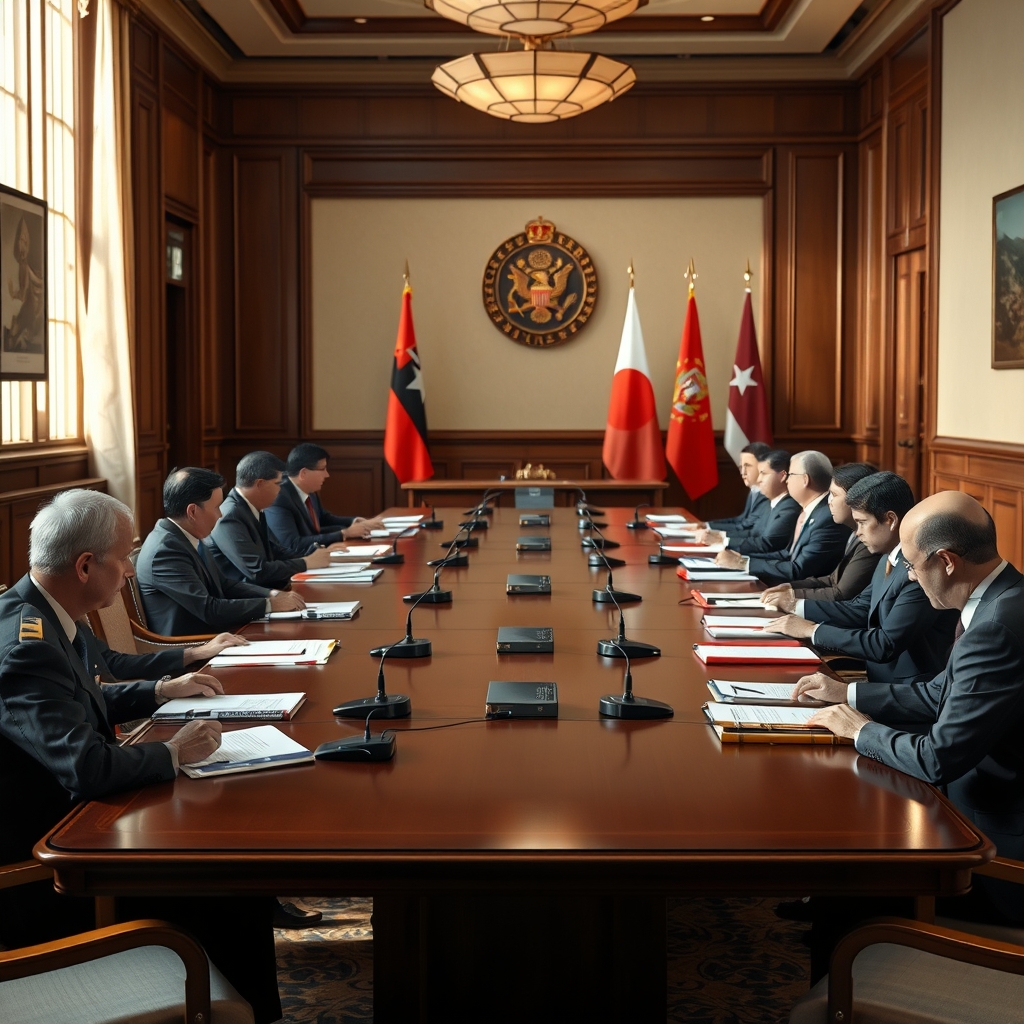
On Friday, at Al‑Safa Palace in Mecca, crown prince Mohammed bin Salman, President Recep Tayyip Erdogan, and Prime Minister Shehbaz Sharif held three folders—two green and one crimson—before cameras. The fresh ink on the pages marked the signing of the Makkah Joint Defence Agreement, a pact that binds Saudi Arabia, Turkey and Pakistan together and treats an attack on any one of them as an attack on all three.
The treaty does not name a particular threat. In an official gazette it lists 11 areas of cooperation, including training, logistics and intelligence‑sharing, but none of those clauses resemble a conventional mutual‑defence clause. The ninth article states that the pact does not affect the parties’ obligations under other international agreements.
Analysts say the pact’s value lies in creating uncertainty for adversaries and strengthening collective deterrence. A security–policy expert called it a “strategic signal” rather than an operational alliance, noting that integrated military capacity would still be years away.
In their speeches the three leaders said the pact is aimed at containing Iran and its network of non‑state actors, but they emphasized that it does not target any country and is open to participation from other states seeking peace, prosperity and stability.
Iran’s parliament reacted with a dismissive tone. A member of the National Security and Foreign Policy Commission wrote that the agreement would not bring Saudi security and reflected the same lack of effect seen during years of dependence on United States security guarantees.