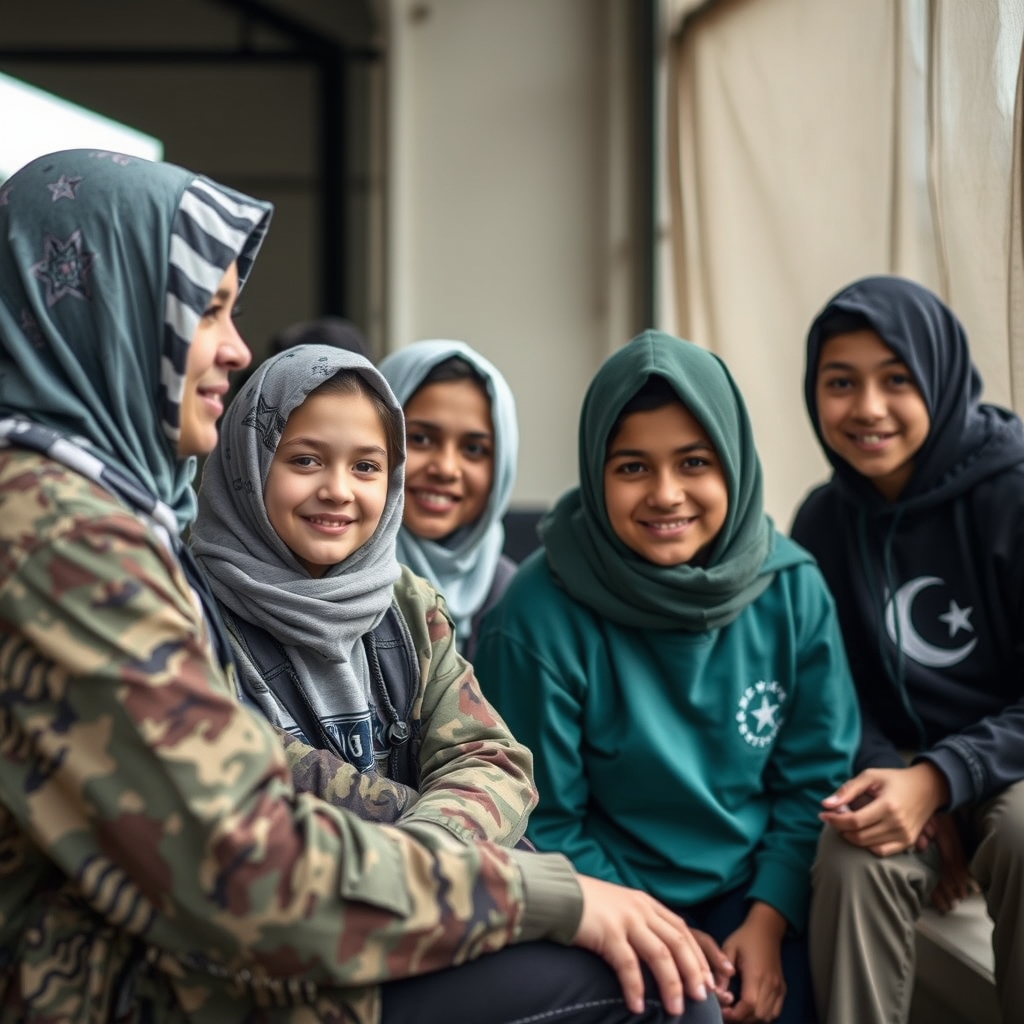
Teenagers from Israel, Palestine and other conflict zones share dialogue and hopes for peace at Devon summer camp.
A 30‑year‑old Peace‑building program held its first UK summer camp in Devon, where 14‑17‑year‑olds from eight countries, including Israel, Palestine, India and Pakistan, spent three weeks in daily two‑hour discussions about conflict and cooperation.
By AVI News News Desk2 min read
🔍 Click to enlarge
Teenagers from Israel, Palestine and other conflict zones share dialogue and hopes for peace at Devon summer camp.
Seeds of Peace, a program that has run for three decades in the United States, held its first summer camp in Britain this year. The event took place at a boarding school in Tavistock, Devon, and drew teenage participants from eight countries, including the United Kingdom, Israel, Palestine, India, Pakistan, Jordan, the United States and Ireland.
Over three weeks, the campers met twice a day for a total of 32 hours of dialogue sessions. The conversations focused on each student’s personal experiences of conflict, pain, and aspiration for peace, rather than on political theories or maps.
Eva Armour, the executive director of Seeds of Peace, said the program’s success stems from listening to lived experiences. "You can’t debate someone else’s lived experience the way that you might debate what happened in the war," she told reporters.
Participants described the exchange as challenging yet transformative. A 17‑year‑old Israeli girl said she had never met a Palestinian outside of a checkpoint and that the meeting helped her see shared interests. A 16‑year‑old Palestinian girl from Jerusalem said she had felt her identity threatened but found common ground with her peers.
The camp cost $9,000 (£6,700) per participant, but many applicants received scholarships that covered most or all of the fee. The organization selects young people they believe could become future community influencers, with a competitive application process in some countries.
Following the October 7 attacks that intensified tensions in Israel and the broader region, the camp received increased calls for its dialogue model. Commentators say the program offers a space where teenagers can discuss issues that leaders sometimes avoid.